
The course, held by the User Education Working Group of the Library Service, provides the skills needed to access the University's electronic resources, retrieve bibliographic resources not included in the Minerva catalogue, and use the SBA's advanced search services.
Delivery mode: online asynchronous
Enrolment: Open to all
Language: ENG
Completion criteria: Watch all video lessons + pass the final test + complete two surveys
Accredited hours: 2h
Teachers: University Library Service: GdL User Education
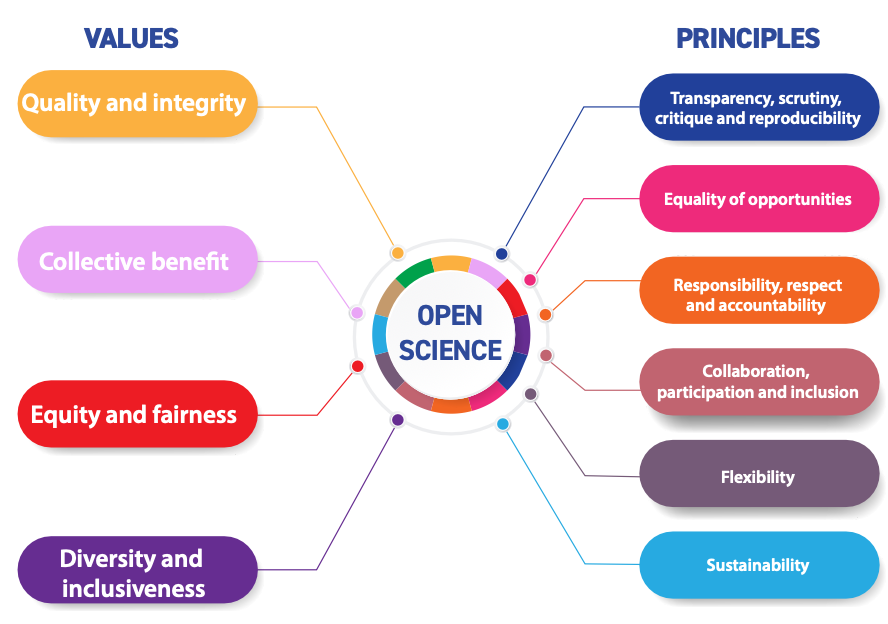
The teaching programme includes the presentation and discussion of topics related to Open Science with the aim of:
- To adopt the concept of Open Science as an everyday research practice;
- To distinguish between different forms of Open Access;
- To learn how to manage copyright and understand the implications of responsible management;
- To improve knowledge of institutional, national and European policies on Open Science;
- Learn about the tools available to researchers as authors and users of research results;
- Learn how dissemination systems affect the choices and behaviour of researchers.
Mode of delivery: online asynchronous
Enrolment: Open to all
Language: ITA/ENG
Completion criteria: Watch all video lessons, pass the final test, post your answer in the forum, complete the survey.
Accredited hours: 6h
Teachers: Dott.ssa Paola Galimberti
Please note: The course includes a second one-hour in-presence part reserved only for interested and registered participants.
To book your place go to the ‘Corsi Sincroni’ section of the portal.
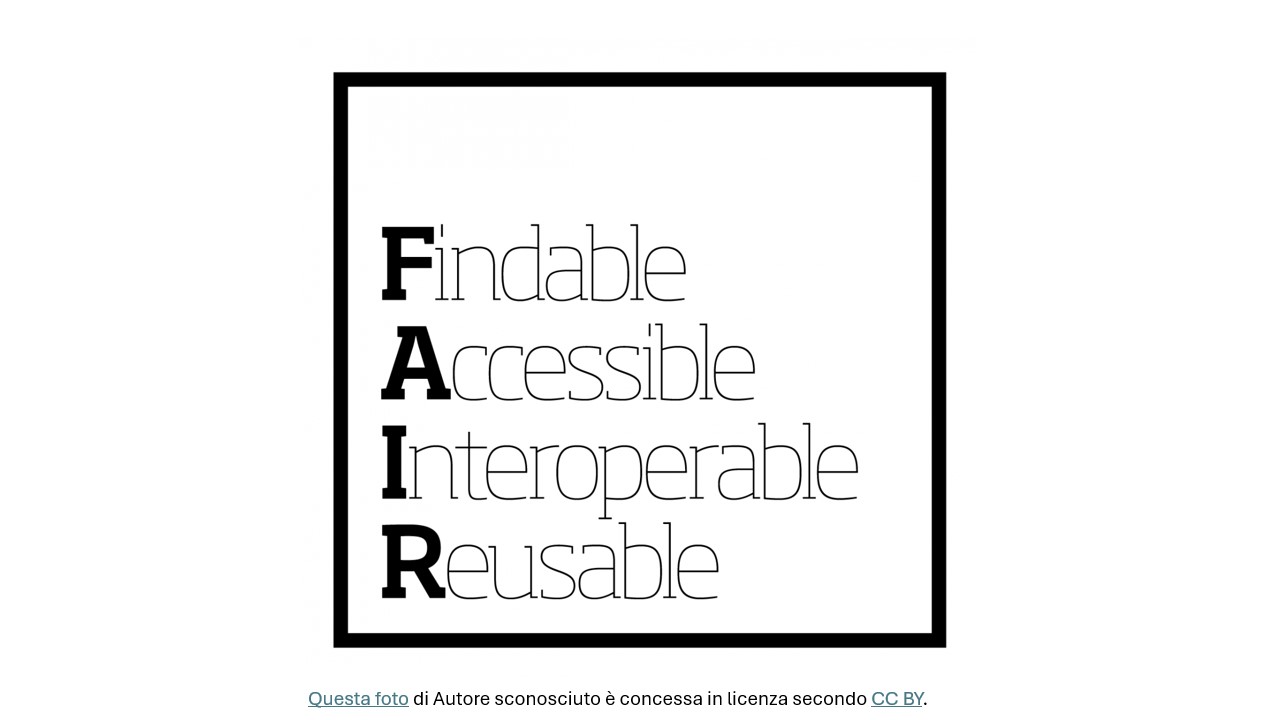
The course aims to:
- Improve data management knowledge and skills (because managing data costs less than not managing it)
- Deepen the definition of FAIR data
- Analyse a data management plan and understand its benefits
Mode of delivery: Online asynchronous
Enrolment: Open to all
Language: ITA/ENG
Completion criteria: Watch all the video lectures, take the tests and complete the survey.
Accredited hours: 4h
Teacher: Dott.ssa Paola Galimberti; dott.ssa Laura Giovinazzi; dott.ssa Margherita Criveller; dott.ssa Carolina Manfredini
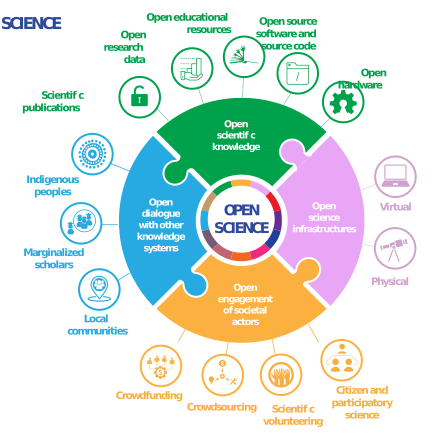
In this Open Science course on predatory journals, pre-printing and open peer review we will focus on:
- Define (and identify) a predatory journal or conference
- Learn about and use tools to identify predatory journals and conferences.
- Improve knowledge on preprint and open peer review
- Improve one's knowledge of public infrastructure available to researchers vs. proprietary tools
Mode of delivery: Online asynchronous
Enrolment: Open to all
Language: ITA/ENG
Completion criteria: Watch all video lectures, pass the final test and complete the survey
Accredited hours: 5h
Teachers: Dott.ssa Paola Galimberti

Research integrity entails honesty and ethical conduct, avoiding plagiarism and data manipulation.
Supporting reproducible research involves transparent reporting and sharing of data and methodologies.
Reproducibility ensures consistent results with the same data and methods, while replicability confirms results across different datasets or methods.
To achieve reproducibility, researchers follow rigorous methodologies, document workflows, and make data openly accessible.
National and international regulations govern research integrity, covering areas like data management and ethical treatment of subjects.
Mode of delivery: online asynchronous
Enrolment: Open to all
Language: ENG
Completion criteria: Listen to all the audios, pass the final tests and complete the survey.
Accredited hours: 5h
Teachers: Prof. ssa Ragni, Prof.ssa Edefonti, prof. Sironi